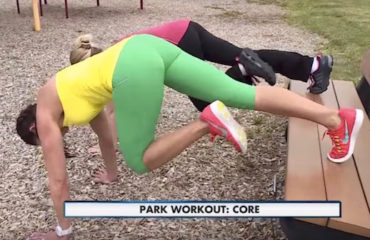
High-intensity interval training (HIIT) involves alternating brief bouts (60 seconds to 4 minutes) of higher-intensity sessions with either rest or lower-intensity workloads throughout an exercise routine.
HIIT is designed for people whose primary concerns are boosting overall cardiovascular fitness, endurance, and fat loss, without losing the muscle mass they already have.
HIIT training has become extremely popular in the past few years and has proven to be effective in improving athletic performance and enhancing weight loss. Recently, scientific evidence demonstrates that HIIT can induce significantly greater improvements in cardiorespiratory fitness and other physiological parameters when compared to moderate-intensity, continuous training, which is traditionally prescribed for clinical populations.
BENEFITS:
1. Efficient
2. Burns more calories due to the workout being more strenuous, requiring more energy to recover
3. Improves cardiovascular fitness
4. Healthier heart
5. No equipment or gym needed
6. Challenging
7. Reduces body fat
8. Enhances adherence
The surprising thing about HIIT is that it involves such a small total amount of exercise.
By including HIIT in your exercise plan, you can realize remarkable results in a short amount of time, which is good news for
busy people.
The key element of HIIT that makes it different from other forms of interval training is that the high intensity intervals involve
maximum effort, not simply a higher heart rate. Staying active during the recovery period allows the muscles to remove the metabolic waste and produce more energy for the next bout of high intensity exercise.
HOW TO GET STARTED:
Choose an aerobic exercise—like stationary bicycling. Warm up for 5 minutes, and perform just a few alternating speed and recovery intervals; 3-4 bouts of each should be plenty and will give you a feel for it; finish with an easy cool down. If/once you are more conditioned, feel free to increase to 6-8 bouts of each. To challenge yourself even more, have your speed and active recovery be the same length of time.
Always warm up and cool down for at least five minutes before and after each HIIT session.
5 minute warm-up (3-4 exertion level)
1 minute speed (7-9 exertion or 85-95% of maximum heart rate)
2 minute active recovery (4-6 exertion or 50-70% of maximum heart rate)
(repeat 3 more times)
5 minute cool-down
22 minute workout
4 minutes of total speed time
HIIT protocols vary widely. There’s no one best single way to structure them. Experiment with shorter and longer speed and recovery intervals to find what works best for you.
Gradually work up to 8-10 or more speed intervals, depending on your fitness goals. Keep in mind that the most common mistake made with interval training is making the recovery intervals too short.
Start with one HIIT workout a week for the first month and as you progress slowly add a second weekly HIIT workout. Progress slowly. Allow at least one full day of recovery between HIIT sessions.
Exercise examples: jogging, biking, treadmill, elliptical, stair climbers, stationery bike, runner lunges, squats, jump rope, etc.
WHAT IS THE RATING OF PERCEIVED EXERTION (RPE)?
The RPE scale is used to measure the intensity of your exercise. The RPE scale runs from
0 – 10. The numbers below relate to phrases used to rate how easy or difficult you find an activity. For example, 0 (nothing at all, easy) would be how you feel when sitting in a chair; 10 (very, very hard) is how you feel at the end of an exercise stress test or after a very difficult activity.
0 – Nothing at all
1 – Very light
2
3 – Moderate
4 – Somewhat hard
5 – Hard
6
7 – Very hard
8
9
10 – Very, very hard
This high-intensity training method is best used periodically for up to 6-12 weeks or so to enhance regular training rather than as a year-round fitness strategy.
Like all aspects of training, the key is to start slowly and increase the intensity over time. As with any exercise program, always check with your health care provider before starting.
Summer is a great time for this type of training due to the warmer weather, longer day light and that we tend to have more energy.
Have you ever tried HIIT? If so, what do you like about it?
Shine Brightly,
Ali